


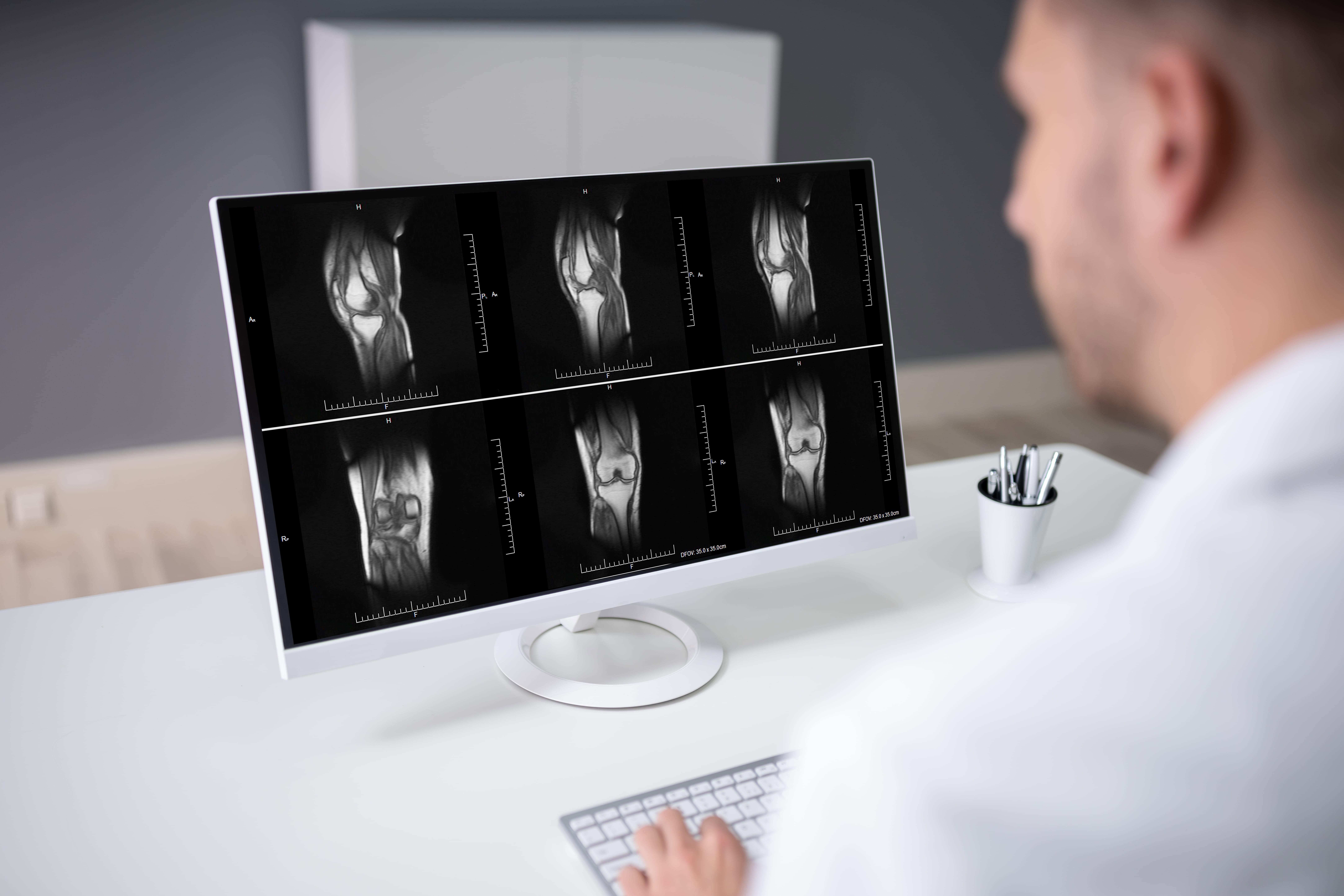




If you asked a room full of plaintiff attorneys what the most important part of a medical record is, many would probably answer, “the MRI.”
As a physician, my answer would often be different.
While MRI findings can provide valuable information, an MRI is ultimately just a picture. It cannot tell us whether a patient is experiencing pain, whether they have weakness, whether their condition is improving, or whether the imaging findings actually explain their symptoms.
That is where the physical examination becomes invaluable.
When I review a case, I often read the physician’s physical examination before I even look at the MRI report. A well-documented examination helps determine whether the patient’s complaints make medical sense and whether the objective findings support the history being presented.
The Physical Examination Connects Symptoms to the Diagnosis
Consider a patient who reports numbness running down the outside of the leg into the top of the foot after lifting a heavy object at work.
If the physical examination demonstrates weakness with ankle dorsiflexion, decreased sensation in that same distribution, and a diminished reflex corresponding to the suspected nerve root, those findings reinforce the patient’s history. The examination and the symptoms are telling the same story.
Objective findings that align with the patient’s complaints strengthen the overall medical picture.
Conversely, if a patient reports severe, disabling pain but every physical examination over the next six months is entirely normal, that does not automatically mean the patient is not injured. However, it does raise important clinical questions.
Is the diagnosis correct?
Could the pain be originating from a structure that would not be expected to produce objective findings?
Is additional evaluation warranted?
Medicine is rarely about relying on a single test. It is about integrating every available piece of information to arrive at the most accurate diagnosis.
Not All Examination Findings Carry the Same Weight
One common misconception is that every abnormal examination finding has equal significance.
In reality, some findings are subjective, while others are objective.
Tenderness, for example, depends on the patient’s response during the examination. Although clinically important, it is inherently subjective.
Other findings are much more difficult to voluntarily influence, including:
- Muscle atrophy
- Loss of reflexes
- Measurable muscle weakness
- Sensory changes that follow a recognizable nerve distribution
- Documented loss of range of motion
When these objective findings are consistent with both the patient’s history and the remainder of the examination, they provide meaningful medical support for the diagnosis.
Consistency Over Time Strengthens the Evidence
A single physical examination has value.
A consistent pattern documented across multiple examinations is often far more persuasive.
When the emergency physician, physical therapist, orthopedic surgeon, and pain management specialist all record similar findings over several months, the medical evidence becomes increasingly compelling. Consistency across multiple providers makes it much more difficult to argue that the patient’s complaints lack objective support.
The opposite is equally important.
If examination findings change dramatically from one provider to another without a reasonable medical explanation, those inconsistencies deserve careful evaluation. Identifying and understanding those issues before trial is far preferable to discovering them during cross-examination.
Don’t Skip the Examination Section
One of the most common mistakes I see is attorneys reading only the assessment and plan before moving on to the next record.
Some of the strongest evidence in a case is often buried within the physical examination section. It may occupy only a few paragraphs, but those paragraphs frequently provide the objective observations that either support or undermine the entire case.
Carefully reviewing the examination can reveal important details that are easy to overlook but highly significant when evaluating causation, diagnosis, and credibility.
The Physical Examination Tests Whether the Diagnosis Fits the Patient
The physical examination is where physicians evaluate whether the patient’s history is medically believable.
It is where we begin distinguishing between possibilities and probabilities.
Imaging studies may support a diagnosis, but the physical examination helps determine whether that diagnosis actually fits the patient sitting in front of us.
For attorneys reviewing medical records, the examination deserves the same careful attention as the MRI report.
The next time you review a case, spend as much time reading the physical examination as you do studying the imaging. You may discover that the strongest or weakest evidence has been there all along. Contact Dr. Austin Stapleton for expert witness on workers compensation cases, call 314-252-0523.