






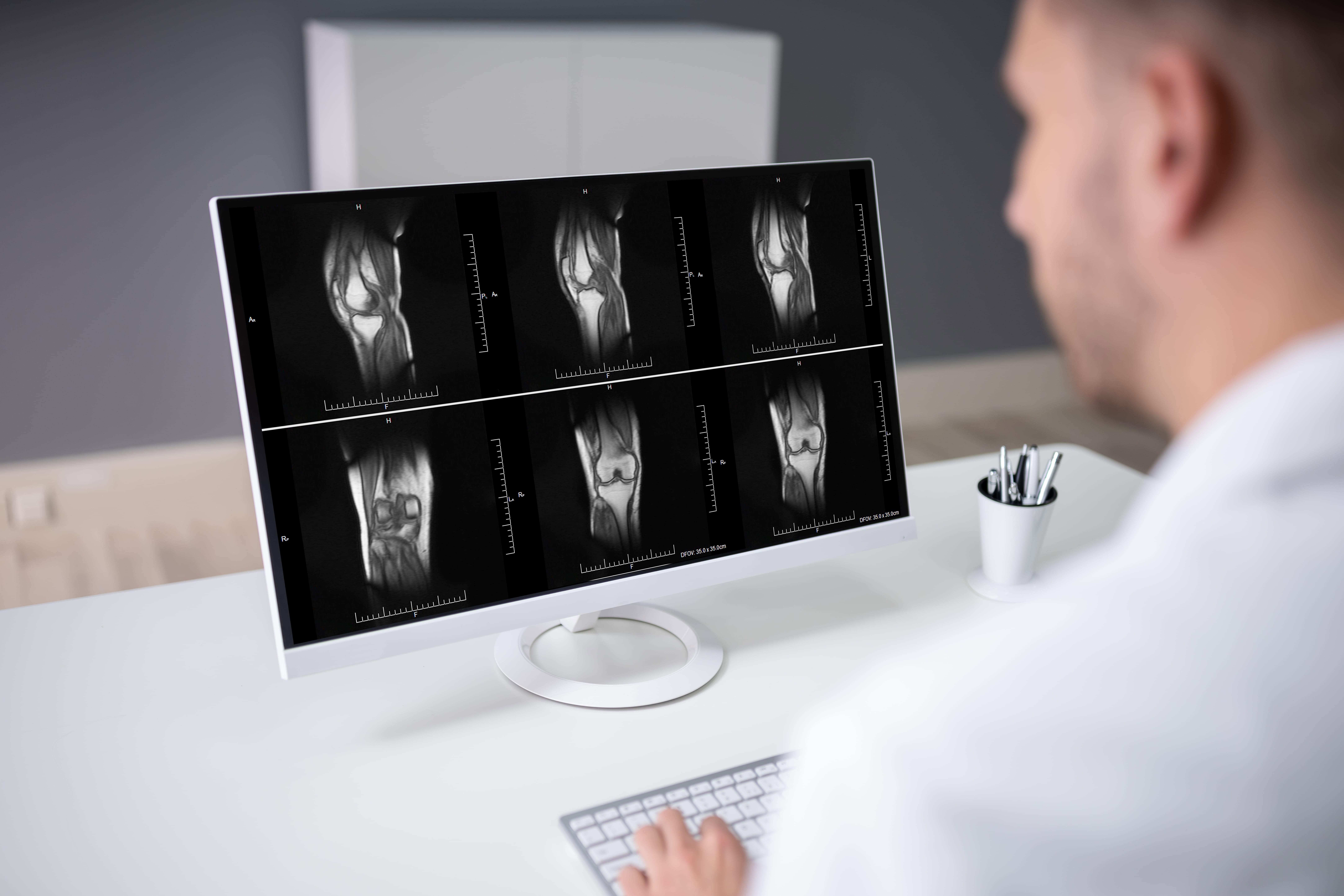
One of the first questions attorneys often ask me is, “What does the MRI show?”
Interestingly, that’s usually not the first question I ask.
Before I ever look at an MRI report, I want to know:
- What happened?
- Where the patient hurts?
- How the symptoms developed?
- What did the physical examination show?
Only then do I look at the imaging. That surprises a lot of attorneys.
Misconception About MRIs
There’s a common misconception that MRI findings determine the strength of a case. They don’t. MRI findings are just one piece of the puzzle. Sometimes they’re the most important piece. Other times they’re almost irrelevant.
One of the biggest mistakes I see is assuming that every abnormal MRI finding was caused by the accident.
Take the lumbar spine as an example. A report may describe multiple disc bulges, degenerative disc disease, facet arthropathy, and foraminal narrowing. To someone without medical training, that sounds significant.
To a physician, it’s often expected.
Many healthy adults with no back pain at all have disc bulges and degenerative changes on MRI. Those findings become more common as we age. Simply finding degeneration on an MRI does not answer the most important question in the case: Did this accident actually cause the patient’s current symptoms?
That’s where the rest of the medical record becomes critical.
Why the Whole Medical Report Matters
Suppose the patient lifted a heavy object at work and immediately developed pain radiating down the back of the leg into the foot. The examination documents decreased sensation along a specific dermatome, weakness in ankle dorsiflexion, and a diminished Achilles reflex. The MRI then shows a disc herniation compressing the S1 nerve root on the same side.
Now the history, the examination, and the imaging all tell the same story.
That’s the type of consistency physicians look for.
Now consider the opposite situation.
The MRI shows a small cervical disc protrusion on the left. The patient complains only of right shoulder pain. The neurological examination is normal, and the treating physician never explains how the MRI finding relates to the patient’s symptoms.
The MRI may still be abnormal, but it may not explain the patient’s complaints.
An MRI answers one question exceptionally well: What does the anatomy look like?
It does not answer several equally important questions.
- Is the abnormality new or old?
- Is it actually causing symptoms?
- Does it explain the patient’s physical examination?
- Is it consistent with the mechanism of injury?
Those are clinical questions, not radiology questions.
Another mistake I see is attorneys focusing on the radiologist’s “Impression” and never reading the body of the report.
The impression is a summary. Sometimes important details about the size of a herniation, the degree of nerve compression, or the exact location of pathology are described in the findings section but abbreviated in the conclusion. Reading only the impression can leave out information that becomes important later.
Finally, remember that physicians don’t treat MRI reports, we treat patients.
Contact Dr. Austin Stapleton, IME and Workers Compensation
I’ve seen patients with relatively minor imaging findings because their symptoms and examination clearly identified the problem. I’ve also seen dramatic MRI abnormalities that required no intervention because they weren’t producing symptoms.
The best medical opinions don’t rely on imaging alone. They combine the patient’s history, physical examination, diagnostic studies, treatment response, and clinical judgment into one coherent explanation.
That’s why two physicians can review the exact same MRI and reach different conclusions. They’re not disagreeing about what the scan shows. They’re disagreeing about what the scan means.
Understanding that distinction can completely change the way you evaluate an injury case. Reach out to Dr. Austin Stapleton at 314-252-0523.